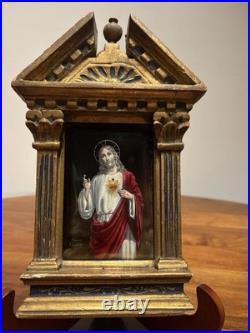
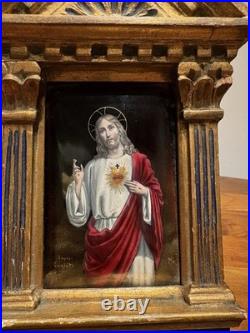
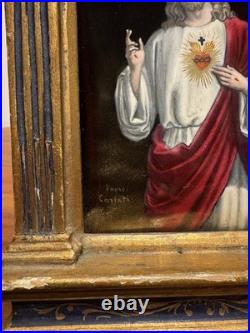
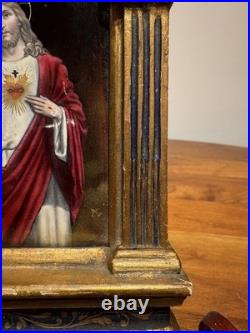









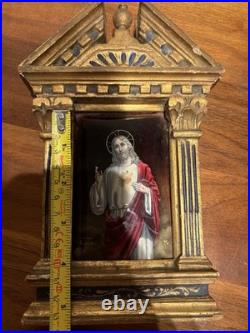
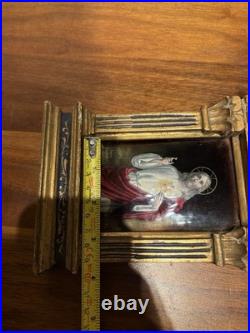

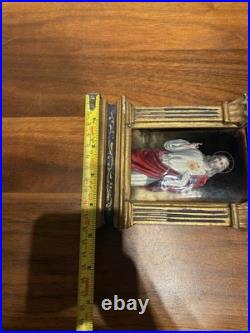
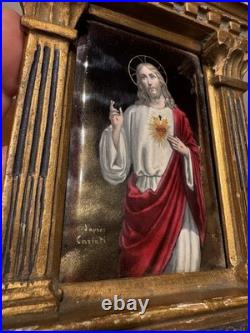

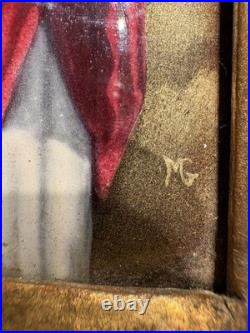
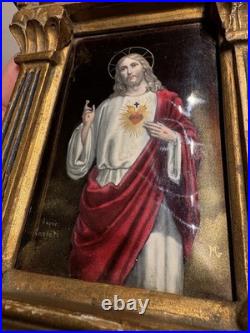
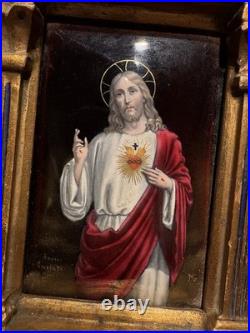
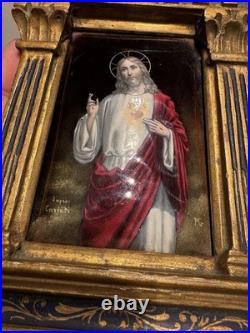
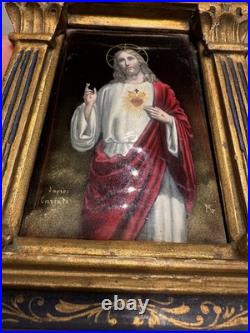

Antique French Catholic devotional artwork depicting the Sacred Heart of Jesus, presented in an elaborate architectural-style gilt wood shrine frame. The central image is executed in enamel on a copper panel, depicting Jesus Christ with a golden halo, wearing a white robe and deep red mantle, displaying the flaming Sacred Heart and raising His hand in blessing. The decorative wooden frame features a triangular pediment with a central finial, carved architectural details, fluted columns with dark blue accents, ornate capitals, and a decorative floral base. The back of the shrine is covered in decorative jacquard fabric with a woven floral pattern and features a metal hanging ring. The composition closely matches an antique French religious image associated with Bouasse Jeune & Cie, a historic Parisian publishing house specializing in Catholic devotional imagery and religious prints during the late 19th and early 20th centuries. This attribution is based on comparison with a matching example bearing the publisher’s label and has not been independently authenticated. The artwork also features visible inscriptions or monograms near the lower corners of the enamel panel. The piece measures approximately 8.5 inches tall and 7 inches wide overall. Pre-owned antique condition with visible age-related wear, including scratches, chips, areas of missing gilt finish, surface marks, and wear along the edges and raised decorative elements of the wooden frame. The enamel panel also shows minor surface marks and signs of age. The jacquard fabric backing has visible discoloration, staining, fraying, and age-related wear. Please carefully examine all photographs for detailed condition information, as they form an important part of the description.